

What Does Denier Mean in Fly Tying Thread?
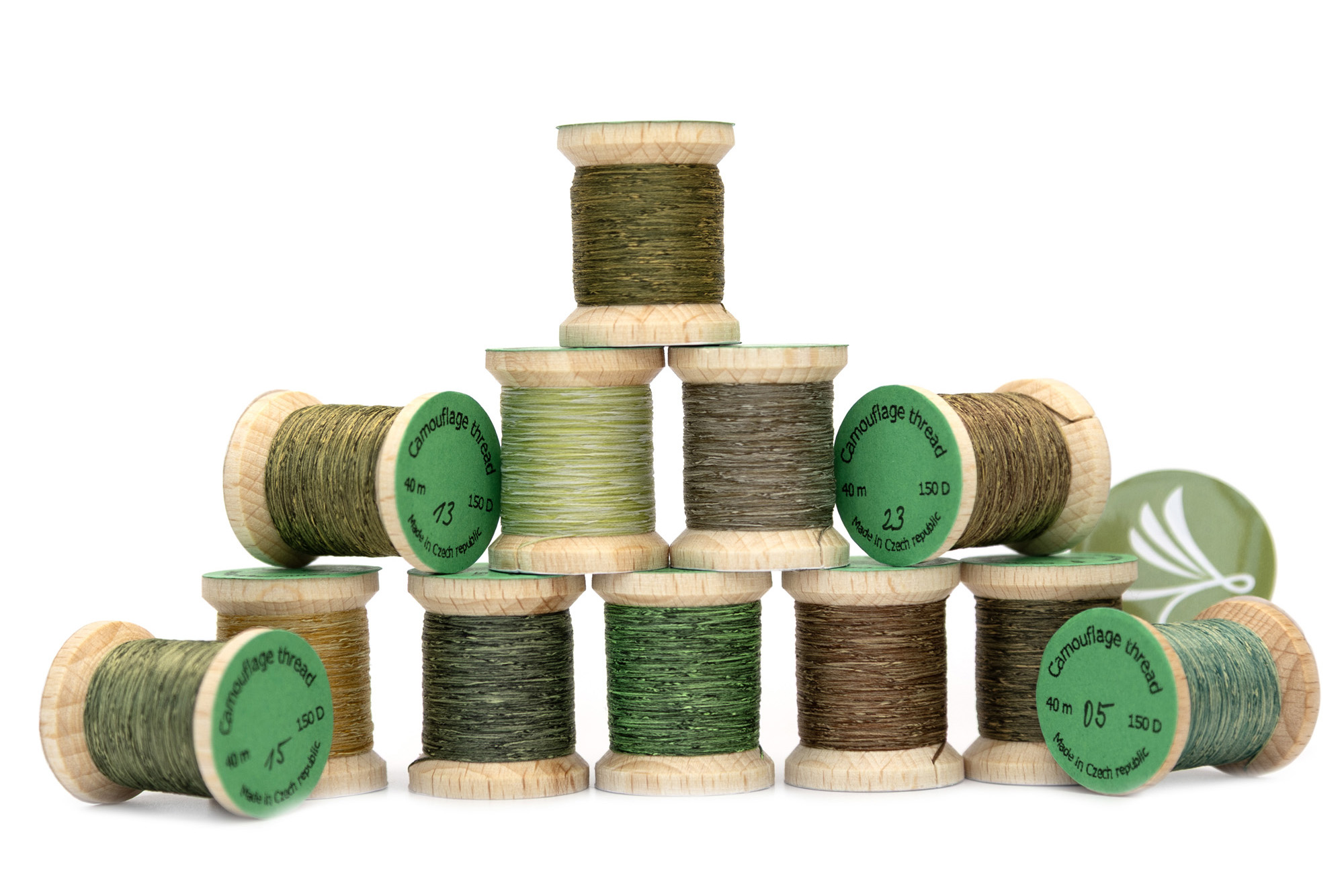
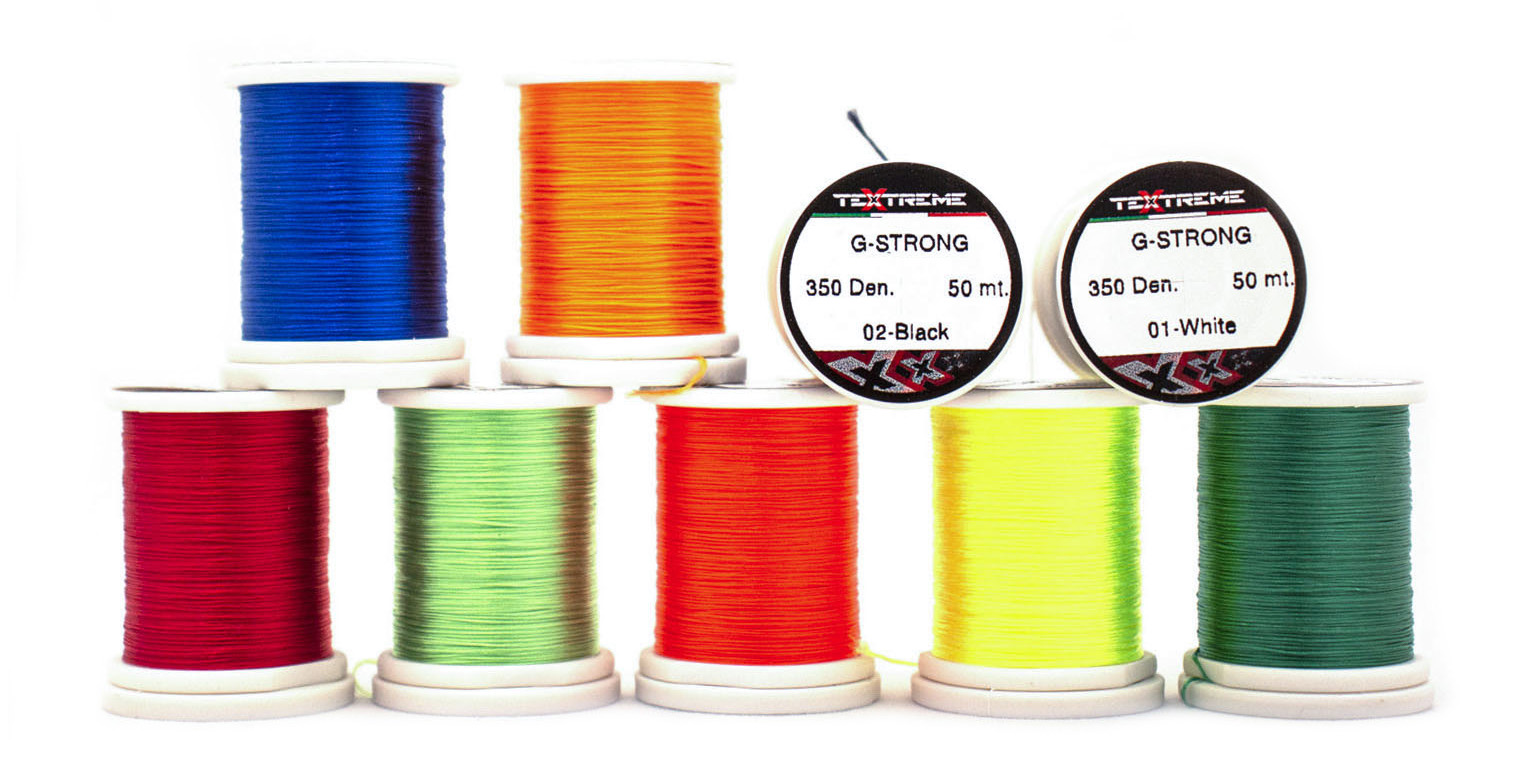
When choosing fly tying thread, you will often see markings such as 30D, 50D, 70D, 100D, 140D or 200D on the spool.
But what does the letter D actually mean?
Denier is one of the most commonly used specifications for modern fly tying threads. It gives us information about the amount of material in the thread and can be very useful when choosing the right thread for a particular fly.
However, Denier is not simply a measurement of “thickness”, nor is it a measure of strength. To use this information correctly, we first need to understand exactly what Denier measures.
What Is Denier?
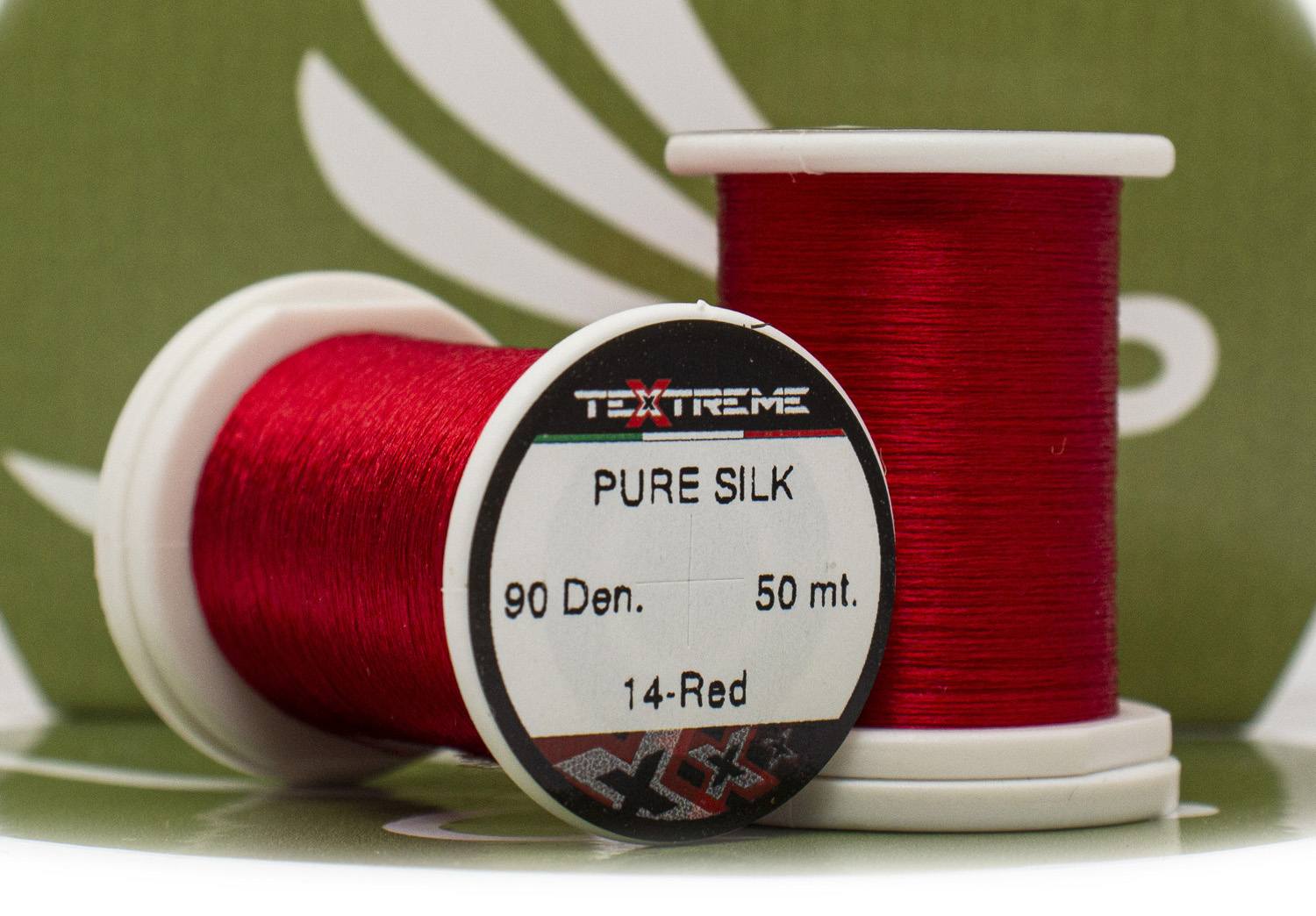
Denier (D) is a unit used to express the linear density of fibers and threads.
The definition is simple:
1 Denier = 1 gram per 9,000 meters of material.
Therefore:
- 50D means 50 grams per 9,000 meters;
- 70D means 70 grams per 9,000 meters;
- 100D means 100 grams per 9,000 meters;
- 140D means 140 grams per 9,000 meters;
- 200D means 200 grams per 9,000 meters.
This is the standard definition used in the technical specifications of fly tying thread manufacturers.
It is important, however, to understand what Denier does not tell us.
Denier does not directly tell us the diameter of the thread in millimeters, nor does it directly tell us how much load the thread can withstand.
Does a Higher Denier Mean a Thicker Thread?
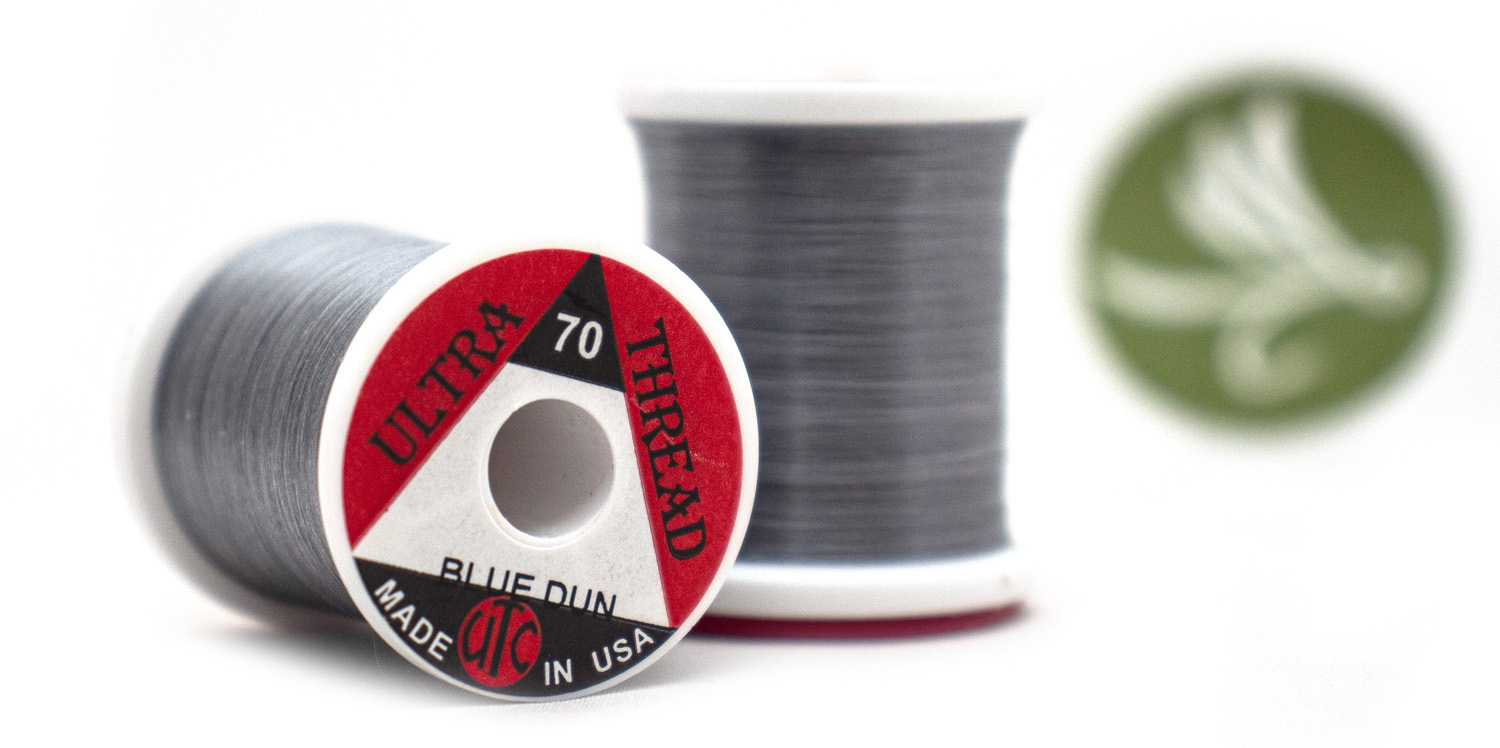
As a general rule, yes. A higher Denier means a greater amount of material in a given length of thread and will usually result in a more substantial thread.
However, this does not mean that we can directly convert Denier into thread diameter in millimeters.
The reason is that two threads with the same Denier can be constructed in very different ways.
Factors include:
- the material the thread is made from;
- the number of fibers or strands;
- the construction of the thread;
- the amount of twisting;
- the way the thread spreads on the hook;
- whether the thread is single-strand or multi-strand.
This is particularly important when tying flies. One thread may flatten and spread across the hook shank, allowing you to build a very slim body, while another thread with a similar Denier may remain more compact and build up material more quickly.
That is why Denier is a useful specification, but it is not enough on its own to tell us how a thread will behave while tying.
Does a Higher Denier Mean a Stronger Thread?
Not directly.
This is one of the most important distinctions to understand.
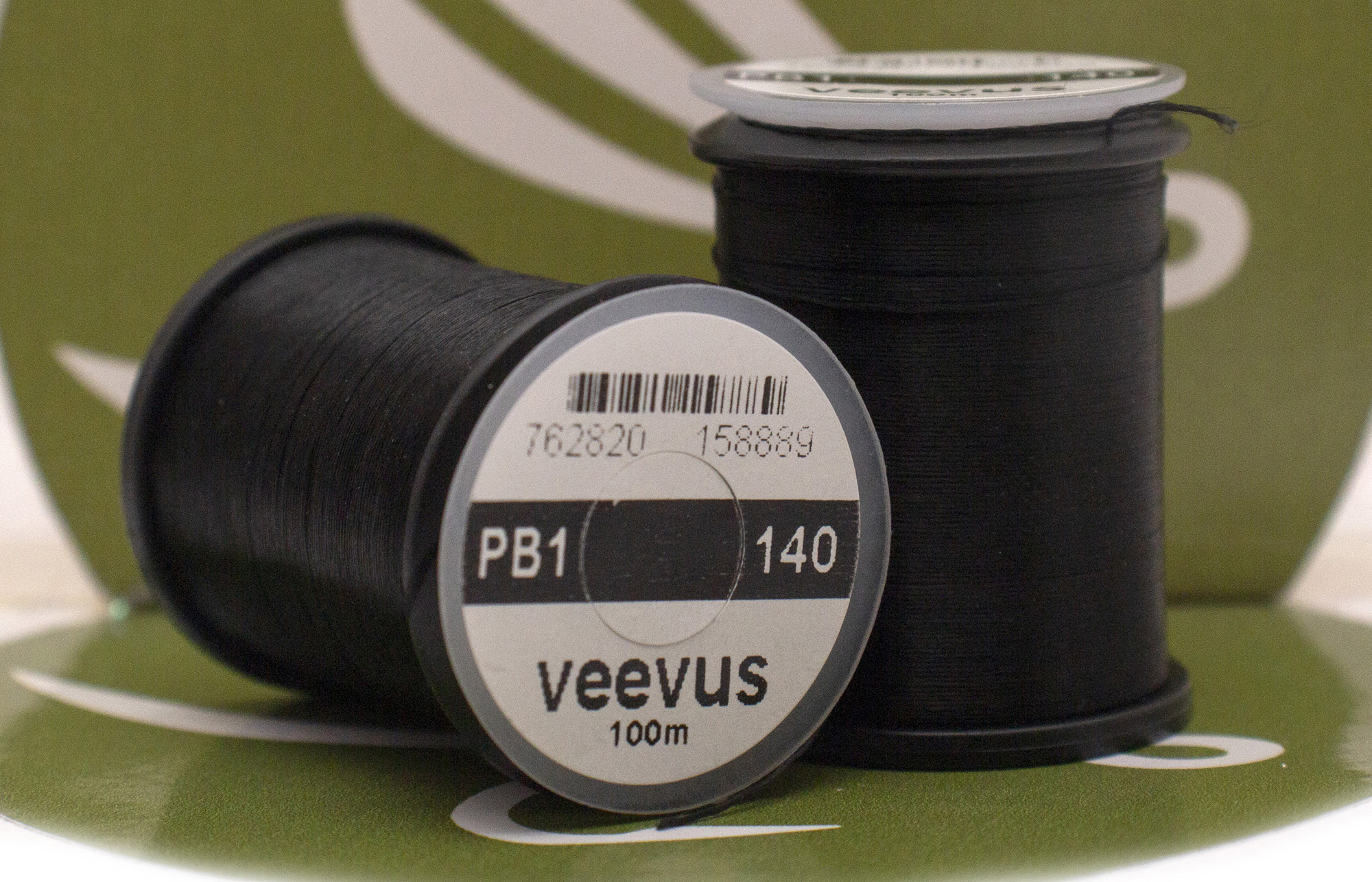
Denier measures the linear density of the material, while thread strength also depends on other factors, including the material, construction and way the thread is built.
For example, two threads can have a similar Denier but different breaking strengths because they are made from different materials or have different constructions.
Manufacturers often list Denier and breaking strength as separate specifications for individual products. This is important because it shows that Denier and thread strength are not the same thing.
Therefore:
A higher Denier may be associated with greater strength, but Denier itself is not a measure of strength.
When strength is important, we should also look for the specific breaking strength specification.
What Do 30D, 70D, 140D and 200D Mean in Practice?
This is where Denier becomes particularly useful to the fly tyer.
Generally speaking, finer threads are used for smaller and more delicate flies, while heavier threads are suitable for larger patterns and situations where more tying pressure is required.
There is no universal rule, however, such as “70D is for this hook size and 140D is for that hook size.”
It depends on the specific thread and its construction.
For example, one manufacturer may recommend a particular 70D thread for very small flies, while another 70D thread may be designed for a different application. This is why Denier should always be considered together with the specifications and intended use of the particular thread.
In other words, Denier gives us a useful starting point, but it does not determine the application of a thread by itself.
What Else Should We Know About a Fly Tying Thread?
If we choose a thread based on Denier alone, we are only looking at part of the picture.
For a practical choice, it is also worth considering:
Material
Polyester, nylon, GSP, silk and other materials can behave differently even when they have similar Denier ratings.
Construction
The number of strands and the way they are constructed affect how the thread behaves on the hook.
Flattening and Spreading
Some threads can flatten and spread across the hook shank. This can be particularly useful when we want to build a slim and flat body.
Ability to Split
With certain multi-strand threads, the thread can be split and used for a dubbing loop or other tying techniques.
Breaking Strength
When working with larger flies or securing bulky materials, the actual breaking strength of the thread can be much more important than its Denier rating alone.
Denier and the 6/0, 8/0, 10/0 and 12/0 Thread Sizes
If you have already worked with fly tying threads, you have probably also seen markings such as 6/0, 8/0, 10/0 and 12/0, and sometimes even 14/0 or 16/0.
This is another way manufacturers indicate thread size.
This is also where confusion often begins, because Denier and the “aught” system are not the same unit of measurement.
More importantly, we should not assume that a designation such as 8/0 always corresponds to exactly the same Denier rating across all manufacturers.
For example, different manufacturers and product ranges can associate the same aught designation with different Denier values.
It is therefore better to treat Denier and designations such as 6/0, 8/0, 10/0 and so on as separate specifications, rather than as two universally interchangeable scales.
This will be the subject of our next article:
What Do 6/0, 8/0, 10/0 and 12/0 Mean in Fly Tying Thread?
How Do You Choose a Thread When You Know the Denier?
When a Denier rating is shown on the spool, it gives us an initial indication of the amount of material in the thread. But when choosing a thread, we should consider Denier together with the intended application of the specific thread.
For small dry flies, we will generally look for a finer thread that allows us to build a compact body without adding unnecessary bulk.
For nymphs and medium-sized flies, a heavier thread may be appropriate, particularly when we need to secure more materials.
For large streamers and predator patterns, strength and control over the materials can often be more important than having the finest possible thread.
Ultimately, choosing the right thread is a combination of fly size, amount of material, tying technique and the desired final result.
That is why the same Denier rating can have different applications in different fly patterns.
See Also
Fly Tying Threads – A Comparative Guide – a comparison of different thread sizing systems, materials, construction, strength and other characteristics.Explore the fly tying threads available at FlyFishing.bg and compare different types, thread sizes and constructions.