



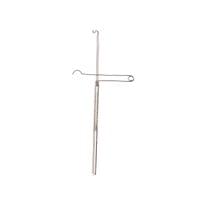
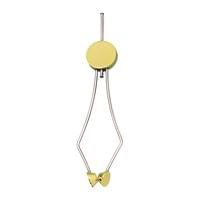
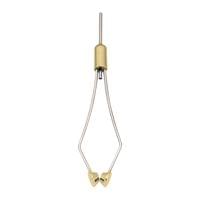
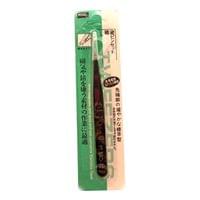
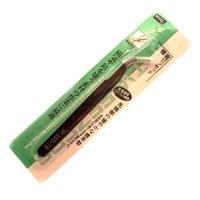
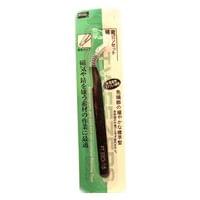


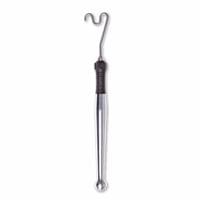
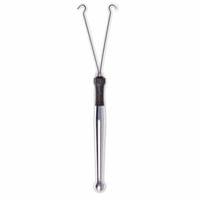
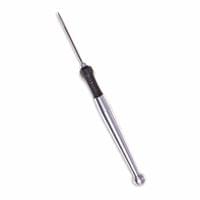
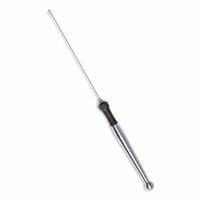
On the pages of our fly tying online store we offer over 250 different tools for tying artificial flies.
The main parameters by which you can divide them are the following:
Purpose - when tying artificial flies, it is advisable to use different specialized tools for almost every operation, starting with
Shuttle for mounting thread
a mandatory basic tool, even usually in several pieces on the fly tying table. The shuttle, in addition to the function of holding the spool with the thread while tying, has another - to provide tension (tension) of the thread during tying. The shuttles come in different sizes depending on the flies being tied, with different tube lengths, with different tube inserts (usually metal or ceramic), there are self-winding, rotary, with straight or curved arms, etc.
Scissors
Another one of the most basic tools, without which you would also have a hard time tying - they are divided by the type of blade such as size - larger, normal or very fine blades, shape - straight or curved blades, blade surface - smooth or serrated (used mainly for fur and other materials that slide). The material they are made of can also be different - steel or tungsten. The shapes of the handles are also different.
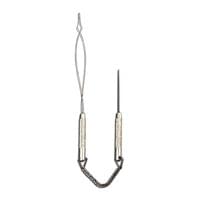
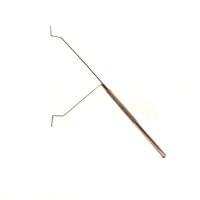
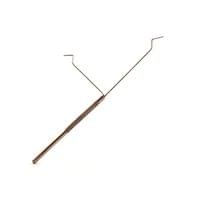
Threaders
There are two models with a different principle, they are used to thread the assembly thread into the shuttles
Stackers for fur
These are tools with which you align already cut bundles of fur or synthetics. They also differ in size according to the length of the fur that you will align.
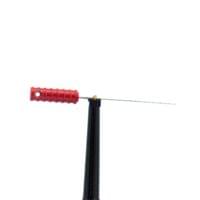
Awls and needles
They have many uses and are indispensable on the fly tying desk. They are usually combined with a tool for half-knots in their rear part. There are also needles for separating thread or for cleaning the hook eye from glue.
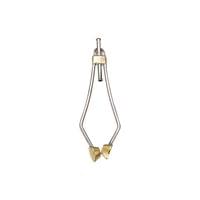
Finishing tools
Apart from size, they are also divided by functionality, as there is very little difference in their use and the final knot is identical.
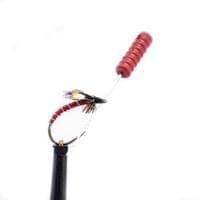
Twisters
They are used to twist dubbing into dubbing loops, then they are wound around the hook arm, resulting in a very good texture. There are many different types and functionalities.
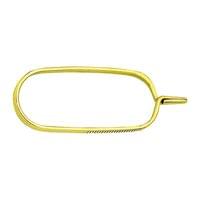
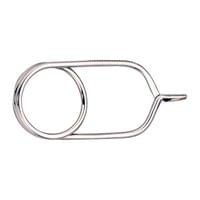
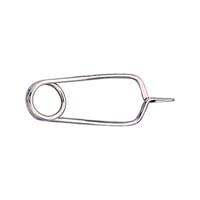
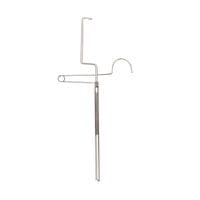
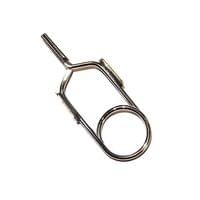
Hackel clips
With their help, the hackel feather is rotated around the hook arm. There are also several different types.
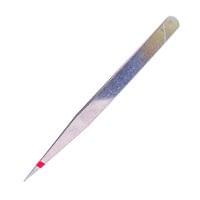
Different types of tweezers, feather or fur clips, dubbing brushes, hackel measuring devices, specialized CDC feather tools, knives, including barber knives and holders for them, various tool stands, boxes, envelopes, magnifying glasses, etc.
Naturally, there are also ready-made tool kits, both for beginner tyers and for advanced fly fishermen. These kits usually include the most necessary tools for tying artificial flies. There are kits without a vise included in them and those that contain everything you need, including a fly tying vise.
Quality and price
like all other tools in any field, those used for tying artificial flies are also produced by completely different companies and, accordingly, depending on their quality, are sold at completely different prices. In a wide range of offered tools, you can find both budget and very high-end tools.