

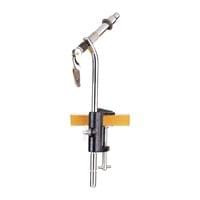
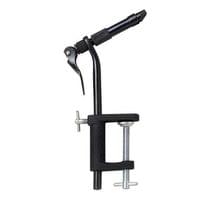
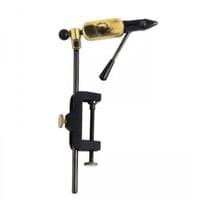
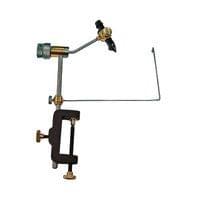


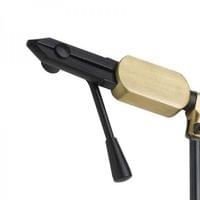
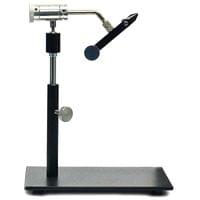
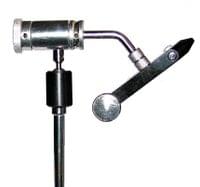


Fly Tying Vise
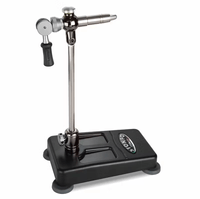
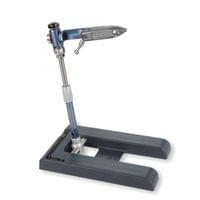
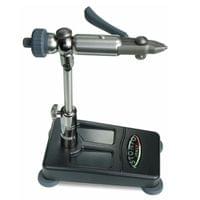
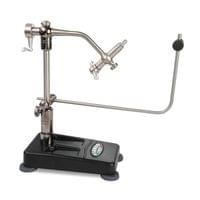
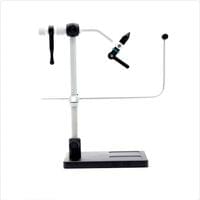
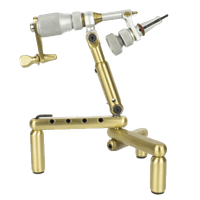
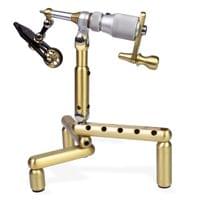
The vise is the main tool when tying artificial flies. Without it, it is impossible to achieve precision, repeatability and convenience in building any fly models. There is a wide variety of fly tying vises, differing in functionality, design and price class.
Main characteristics of fly tying vises
Type of flies
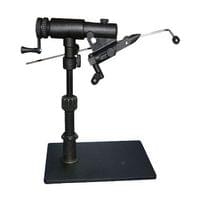
Visees can be designed for standard hooks or for tube flies. In most cases, tube fly systems are offered as an addition to standard vises.
Place of use
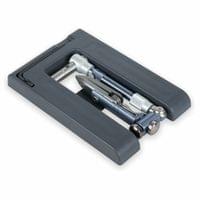
They are divided into standard vises for a fly tying desk and "travel" models. The standard ones are more stable and equipped with more extras, while the travel versions are compact and suitable for tying during fishing trips.
Jaw quality
The quality of the jaws is key to the work. In the lower class, there is a risk of deformation or slipping of the hook, while the middle and high class provide reliable grip and long-term use.
Clamping to the workbench
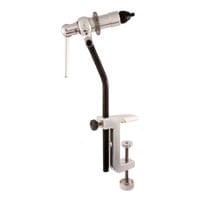
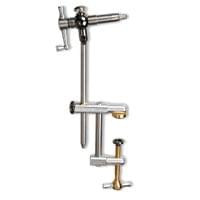
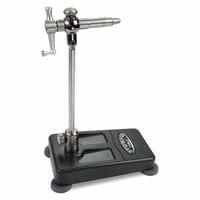
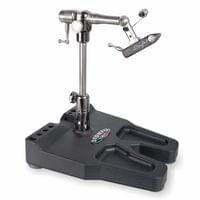
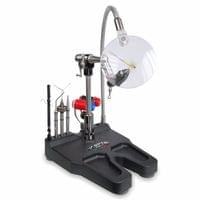
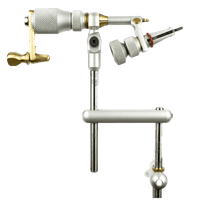
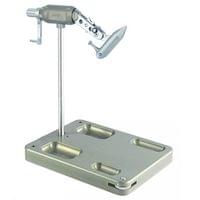
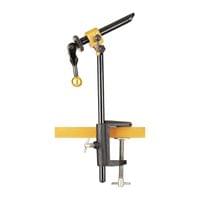
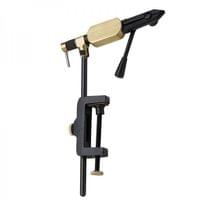
There are two main types - C-clamp (clamp) and models with a heavy base (pedestal). The clamp provides maximum stability, while the base allows mobility and work away from the desk.
Type of rotation
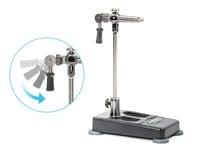
Vices can be stationary, rotating or rotary. Rotary models allow full control and rotation of the fly around its axis, which greatly facilitates complex patterns.
Jaw mechanism
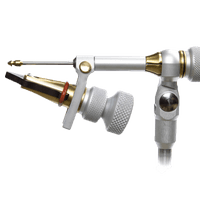
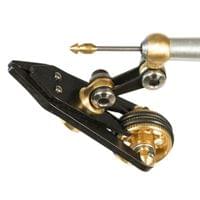
There are “collet” systems (with a lever, screw or eccentric) and lever mechanisms with quick opening and closing.
Jaw design
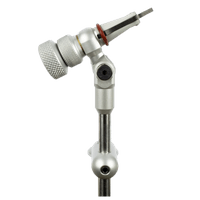
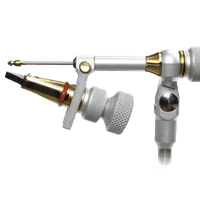
Different manufacturers use different solutions for gripping small and large hooks - from flat surfaces to serrations and special grooves. In the high-end range, interchangeable jaws are often offered.
Price ranges and brands
Vise can also be divided by price range – from budget solutions for beginners to high-end models for professional fly tyers. Among the more affordable options are models from Snowbee, Stonfo and Danica, while in the high-end range, Stonfo Elite, Cottarelli, Petitjean and Maier & Fazis stand out.
The right choice of vise is the basis of quality fly tying. A well-chosen model makes the job easier, increases precision and allows the creation of stable and detailed artificial flies.