





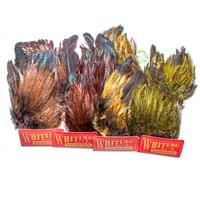


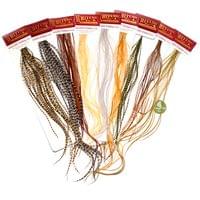

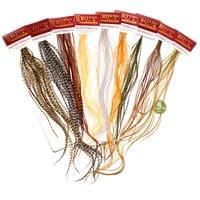
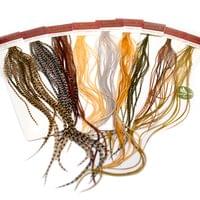


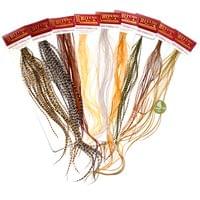
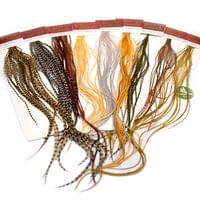
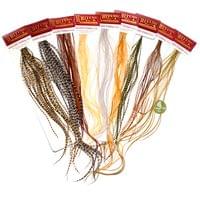
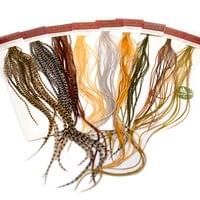


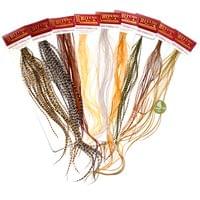
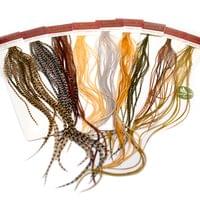
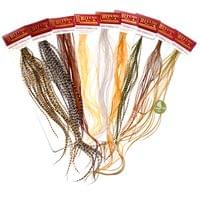
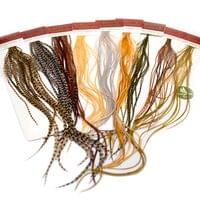
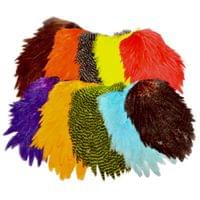
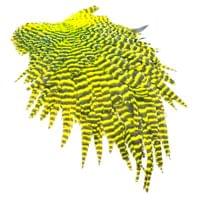


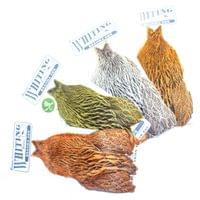
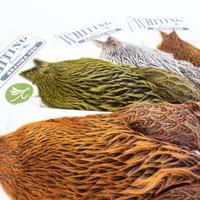


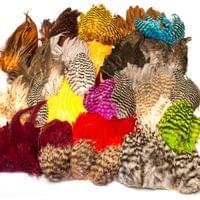




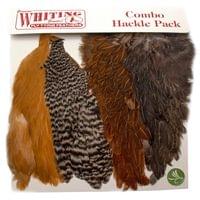
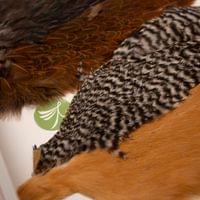
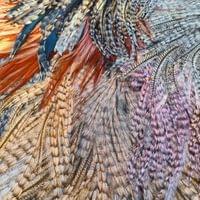
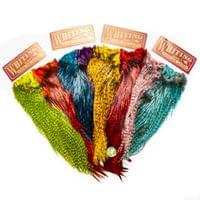
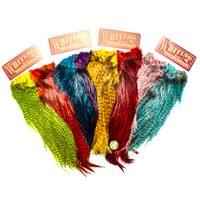


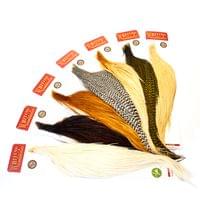

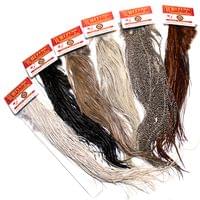
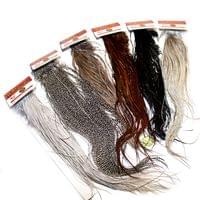

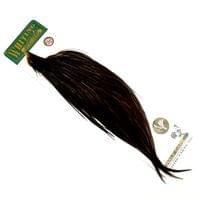

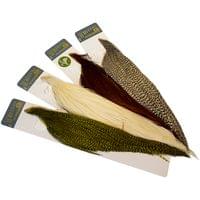
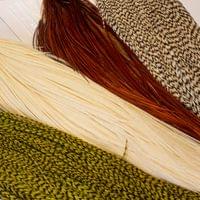
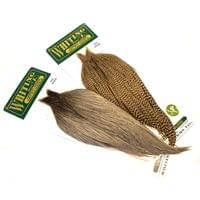

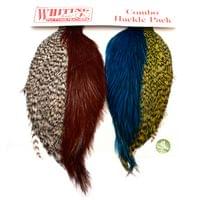
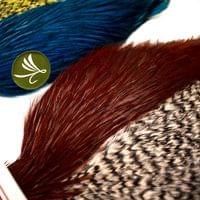
Genetic Capes & Saddles (Genetic Hackle)
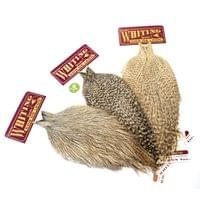
Genetic capes and saddles are among the most important materials in fly tying for dry flies. They come from specially bred roosters selected for producing high-quality hackle feathers.
These feathers are known for their consistency, strength, and unique fiber structure, allowing tiers to create balanced, buoyant, and highly effective dry flies.
Genetic hackle is the result of decades of selective breeding, producing long, uniform feathers suitable for a wide range of hook sizes.
🧬 What does “genetic hackle” mean?
The term refers to selectively bred roosters designed to produce:
longer feathers
higher barb density
uniform fiber thickness
better durability when wrapped
This makes them ideal for dry fly applications where flotation and structure are critical.
🪶 Cape vs Saddle
🪶 Cape (Neck)
Cape feathers come from the neck area of the rooster.
Characteristics:
wide range of feather sizes
high versatility
shorter feathers
suitable for mixed fly sizes
👉 Best for tiers who work across different hook sizes.
🪶 Saddle
Saddle feathers come from the back of the rooster.
Characteristics:
very long feathers
high uniformity
narrow size range
excellent for production tying
👉 Best for tying large numbers of the same fly patterns.
🎯 Applications
Genetic hackle is primarily used for:
Dry flies – main application
Attractor patterns
Classic trout flies
Parachute-style flies
Its main function is to provide flotation and imitate insect legs in the surface film.
⚙️ How to choose the right hackle?
Variety of sizes → Cape
Production tying → Saddle
Maximum dry fly performance → High-grade genetic hackle
🔗 Combination with other materials
Genetic capes and saddles work in combination with: