

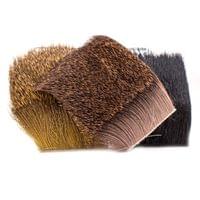
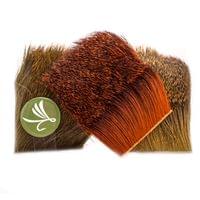


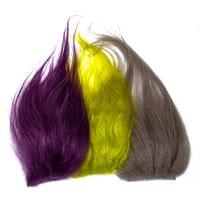
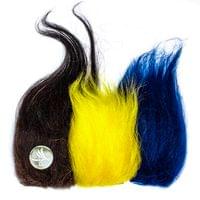


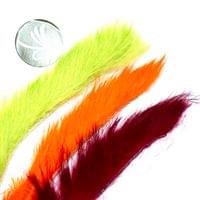
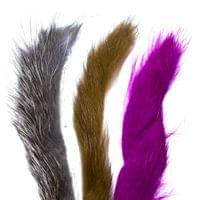


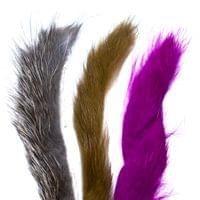
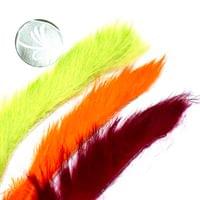


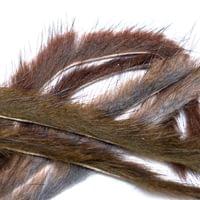
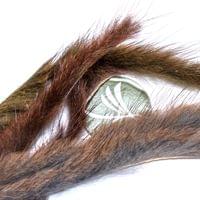


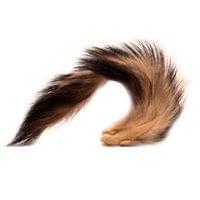
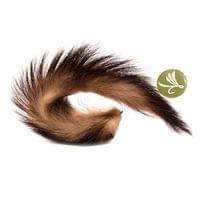




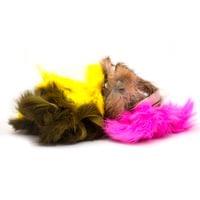
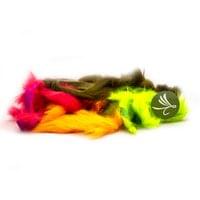


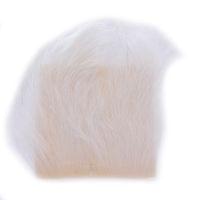

















Fur & Natural Hair for Fly Tying
Fur is one of the most versatile natural materials in fly tying and is used both for creating dubbed bodies and for tying wings, tails, and mobile elements in streamers and wet flies.
Unlike feathers, which rely on structure, fur provides natural softness, lifelike movement, and a flowing silhouette that reacts even to subtle water currents.
This makes fur essential for patterns where movement is more important than precise shape.
Main Types of Fur
Rabbit & Hare
The most versatile material in this category.
- mix of fine underfur and longer guard hairs
- excellent movement in water
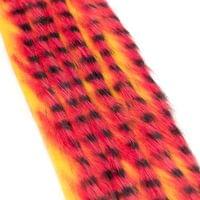
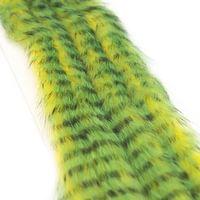
- used for dubbing and strips
Squirrel
Fine and elastic fibers.
- natural buggy effect
- great for nymphs
-soft texture for realistic bodies
Beaver, muskrat, etc.
Dense fine underfur.
- excellent for fine dubbing
- good buoyancy
- ideal for dry flies
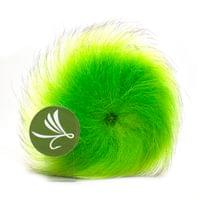
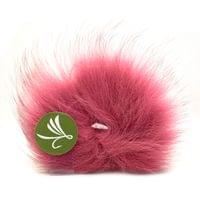
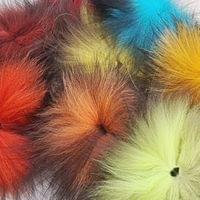
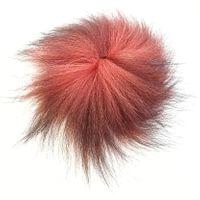
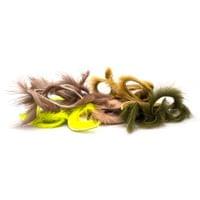
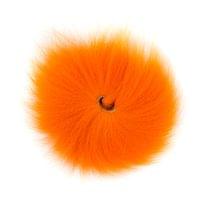
Fox & long-haired fur
Long and mobile fibers.
- strong movement
- ideal for streamers
- creates bulky, flowing profiles
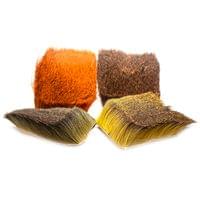
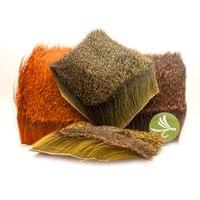
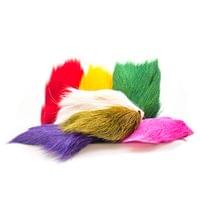
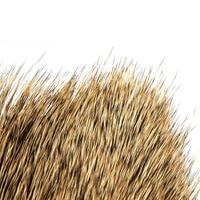
Deer hair
Hollow hair with buoyant properties.
- excellent flotation
- used for dry flies
- can be spun and packed
Applications
Fur is used for:
streamers
nymphs
wet flies
dry flies (deer hair)
dubbing bodies
How fur is used
- as dubbing material
- as wings and tails
- in dubbing loops
- as spun deer hair bodies
Combination with other materials
Fur works best together with: