
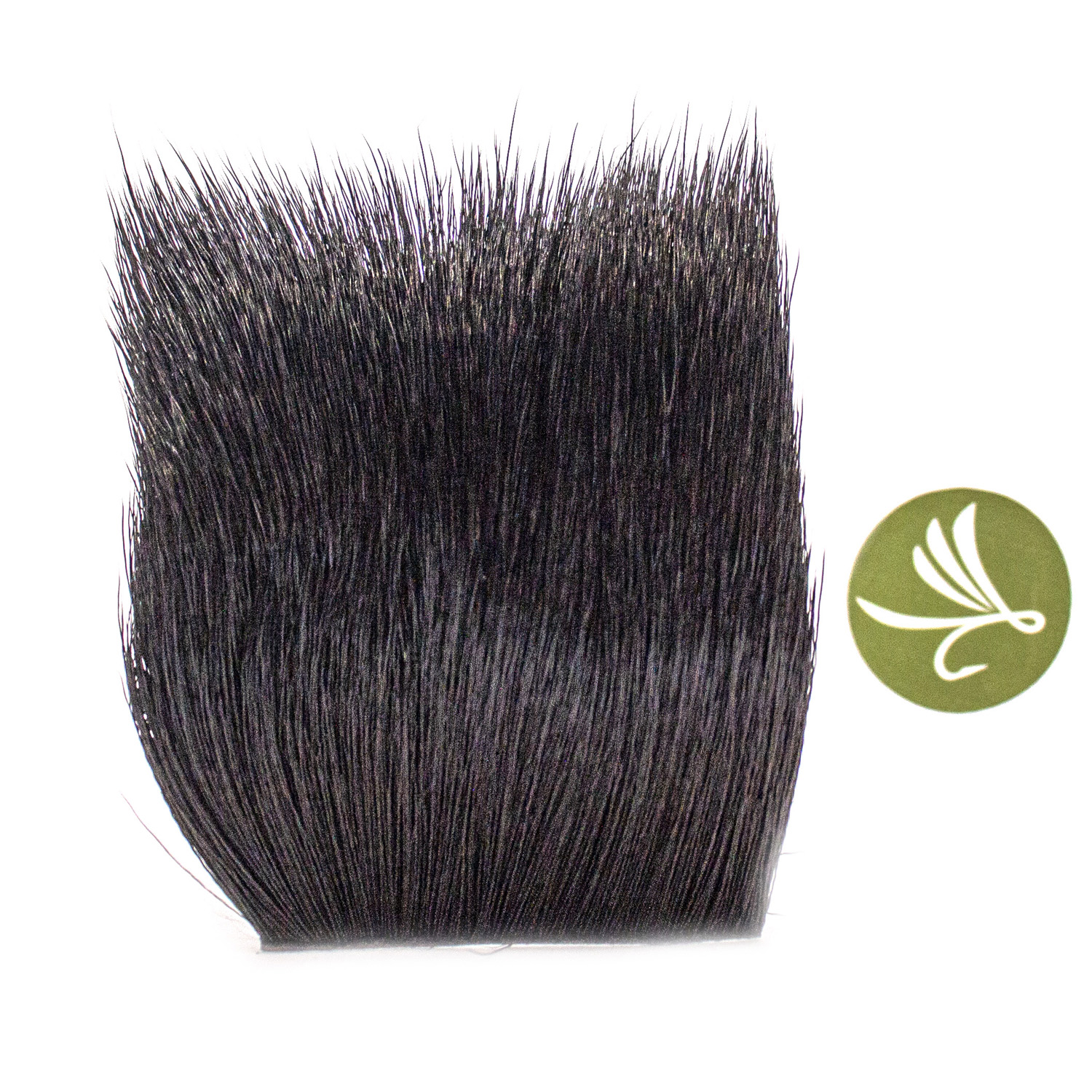
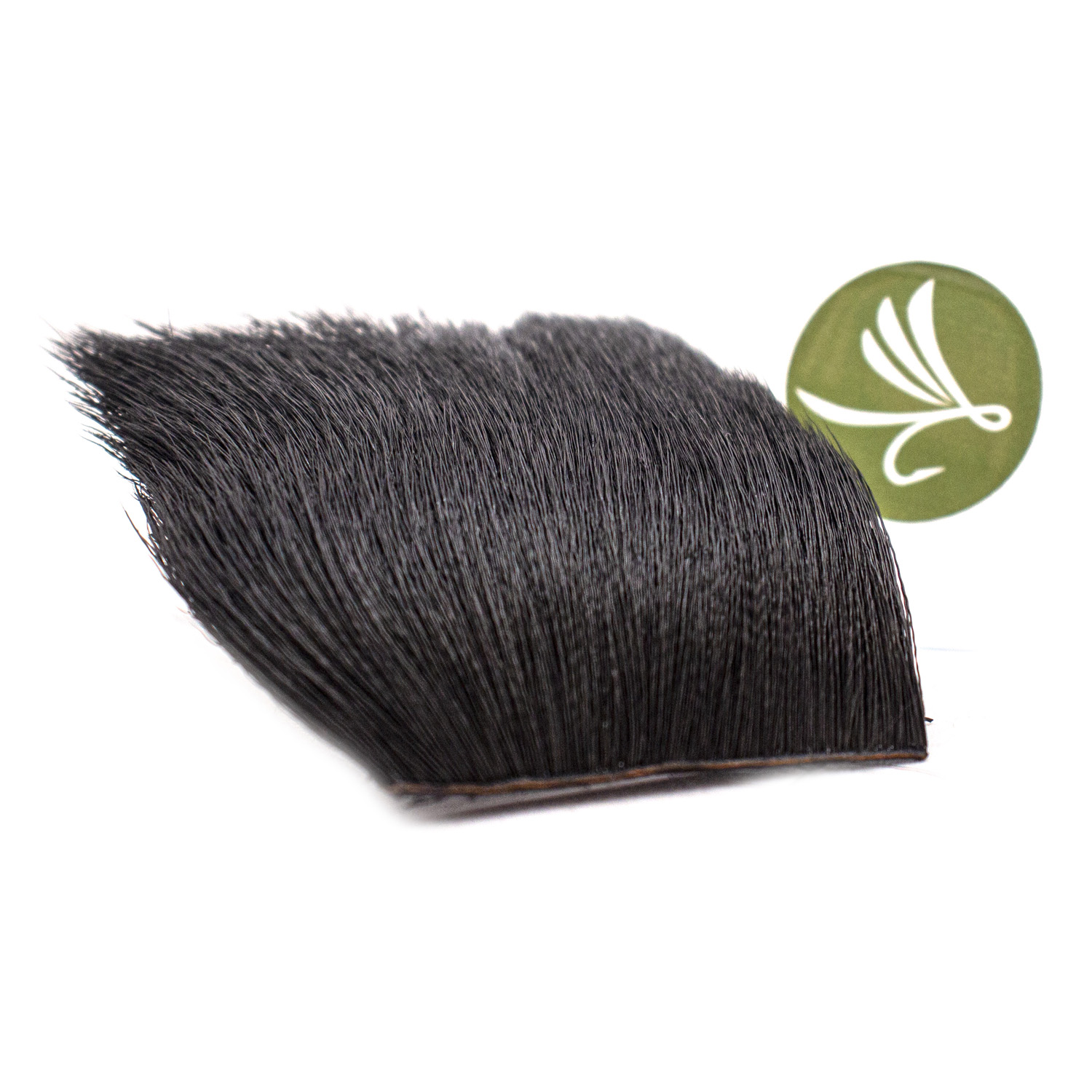
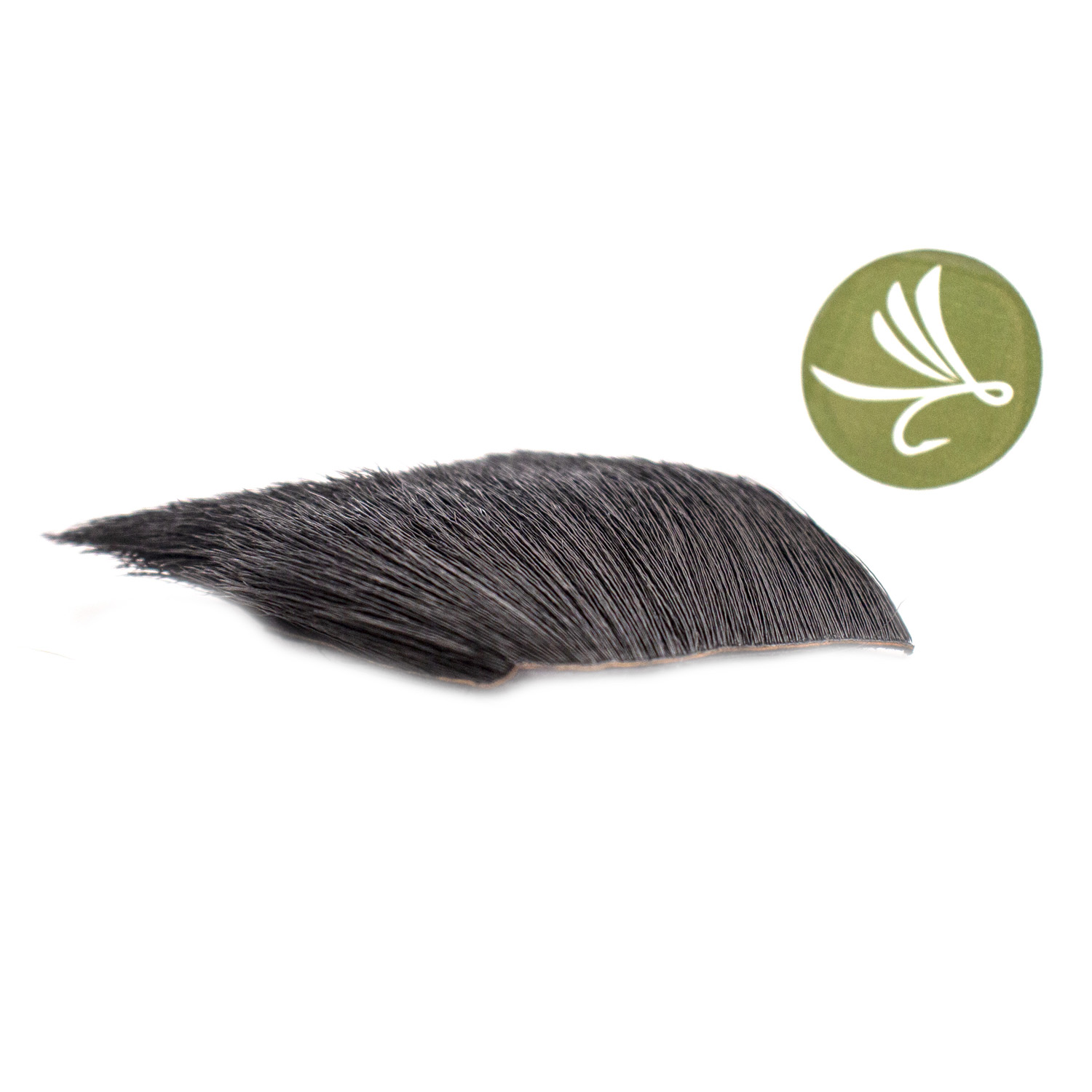
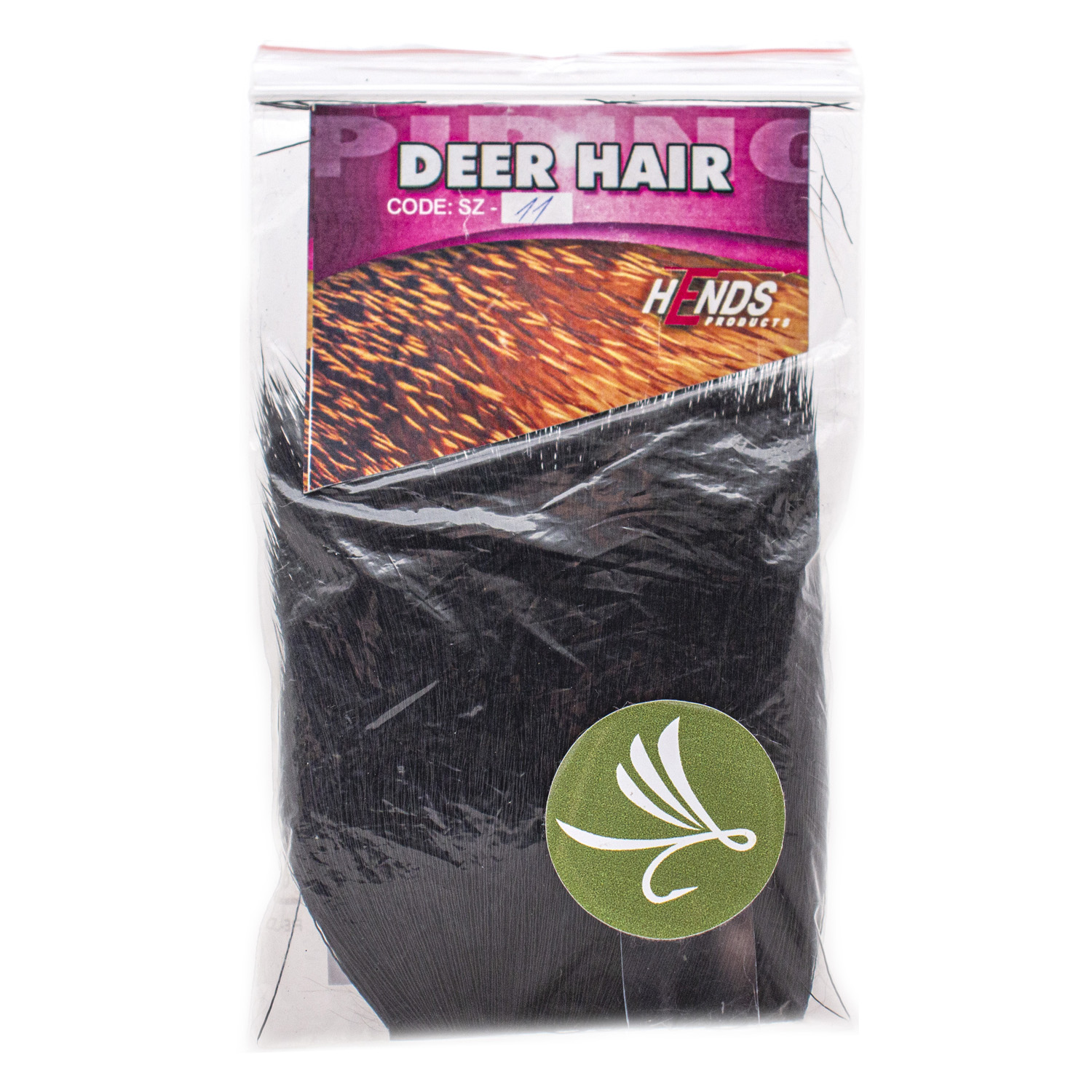
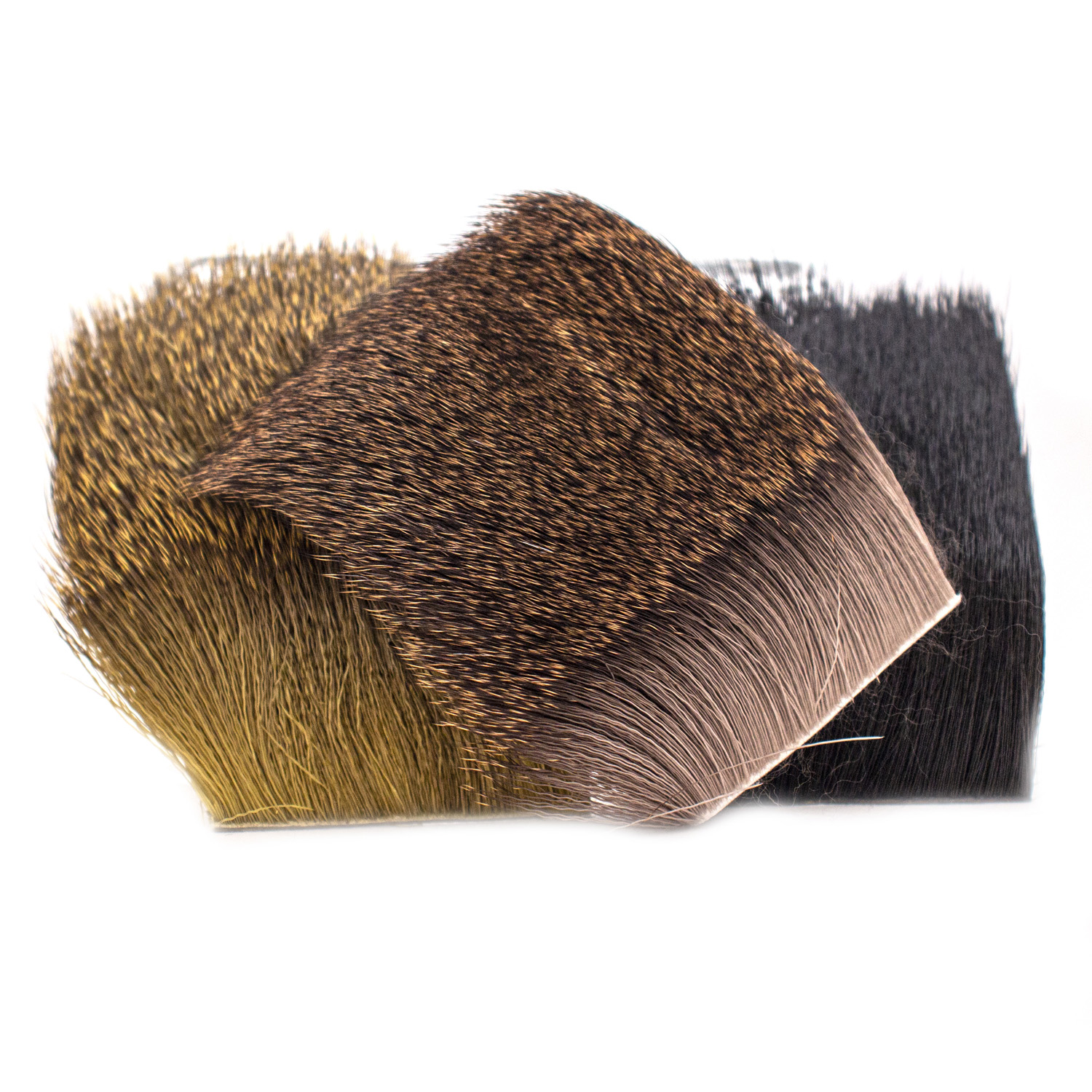
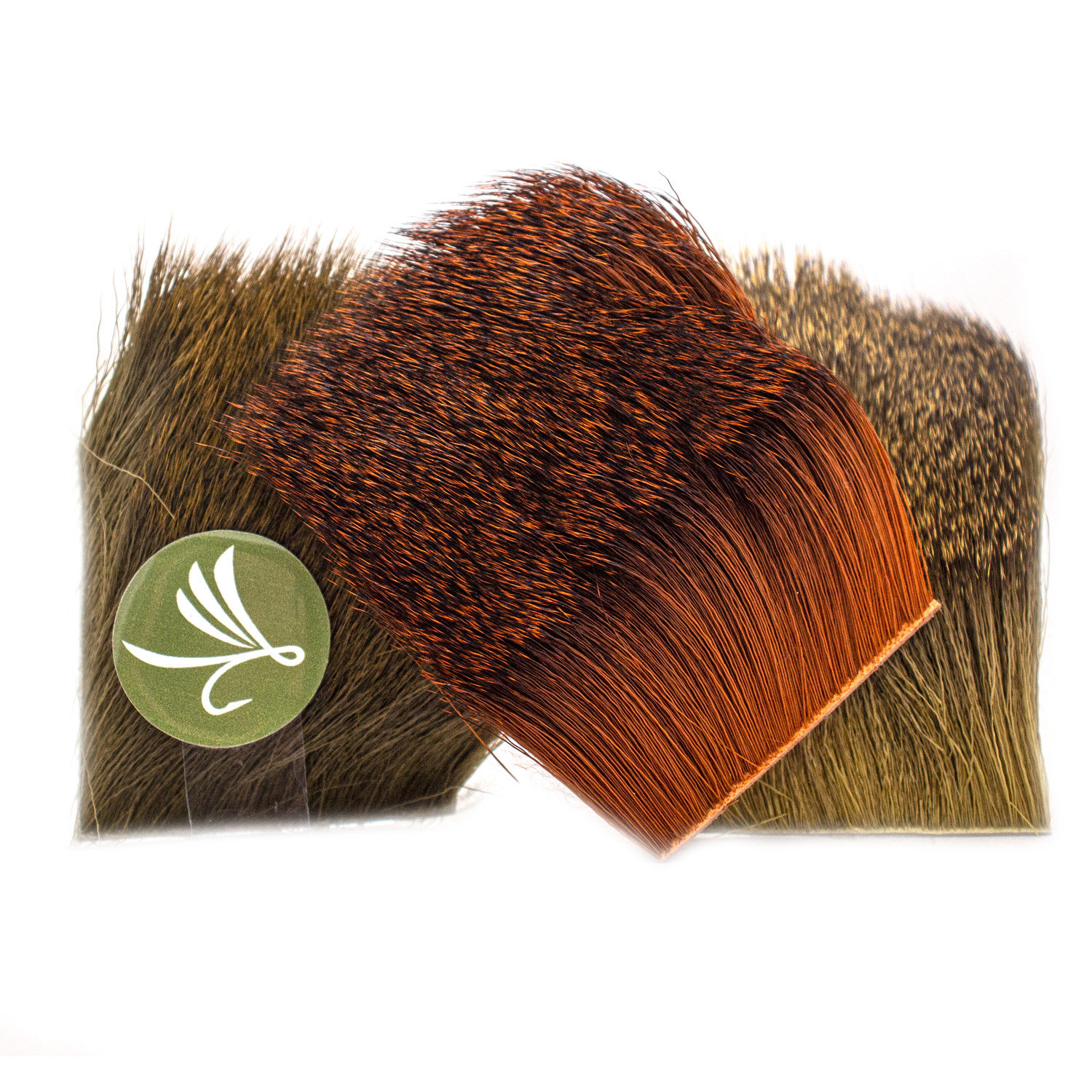
Hends Deer Hair
One of the Most Versatile Natural Materials in Fly Tying
Hends Deer Hair is a premium natural deer hair selected for a wide variety of fly tying applications. Few natural materials can match its versatility, making it an essential component on every fly tyer's bench. From delicate dry flies to large streamers, floating mouse patterns and terrestrial imitations, deer hair has been one of the foundations of modern fly tying for decades.
Every experienced fly tyer keeps several different types of deer hair, as the fibres vary significantly depending on the species, body section, season and processing method. Individual patches may contain hollow or solid fibres, fine or coarse hair, and are available in both natural and dyed colours, allowing each material to excel in different tying applications.
What is Deer Hair?
Deer hair is one of the most important natural materials used in fly tying. Many fibres have a hollow core, making them naturally buoyant and ideal for floating flies, while denser fibres are perfect for wings, tails and extended bodies. The material is also easy to stack, spin and trim, allowing fly tyers to create realistic shapes and highly buoyant patterns.
The term Deer Hair covers hair obtained from numerous members of the deer family (Cervidae), including various deer species, roe deer, elk and other related animals from Europe and North America. Each type offers unique characteristics depending on the part of the hide, the season when it was harvested and the way it has been processed.
This remarkable diversity has made deer hair one of the most studied and widely used natural fly tying materials in the world.
Why Choose Hends Deer Hair?
Extremely Versatile Material
Suitable for dry flies, nymphs, streamers, terrestrials, mouse patterns and many other fly styles.
Excellent Natural Buoyancy
The hollow fibre structure provides outstanding flotation for dry flies and floating patterns.
Easy to Shape and Trim
Perfect for spinning, stacking and trimming to create realistic heads, bodies and wings.
Countless Fly Tying Applications
Can be used for wings, tails, bodies, legs, heads, dubbing blends and extended bodies.
A Timeless Fly Tying Classic
One of the most important natural materials used by fly tyers around the world for generations.
Ideal For
- Dry Flies
- Caddis Patterns
- Comparaduns
- Extended Body Flies
- Nymphs
- Scud and Gammarus Patterns
- Grasshoppers, Beetles and Ants
- Streamers
- Mouse Patterns and Bass Bugs
|
FLYFISHING.BG RECOMMENDATIONIf you're just starting to work with deer hair, we recommend building a small collection of different types and colours over time. Not all deer hair behaves the same—some fibres are highly hollow and flare dramatically when tightened, making them perfect for spinning heads and floating bodies, while denser hair is better suited for wings, tails and extended bodies. For the best results, use a strong tying thread and fine serrated scissors, which make trimming and shaping deer hair much easier without the fibres slipping along the blades. |
Classic Fly Patterns Using Deer Hair
Deer hair is an essential ingredient in many legendary fly patterns, including Elk Hair Caddis, Roman Moser's Balloon Caddis, Goddard & Henry Caddis, Comparadun, Irresistible Adams, extended-body Ephemera Danica patterns, the famous Muddler Minnow, Morris Mouse, numerous Deer Hair Mouse patterns and many other highly effective trout and predator flies.
The material is so important that entire books have been dedicated to mastering its properties and techniques, including the renowned Deer Hair Fly Tying Guidebook. For many fly tyers, working with deer hair becomes a specialised discipline within fly tying itself.
Technical Specifications
| Material | Natural Deer Hair |
| Type | Natural Fly Tying Fur |
| Suitable For | Dry Flies, Nymphs, Streamers, Terrestrials, Mouse Patterns and Bass Bugs |
| Manufacturer | Hends |