

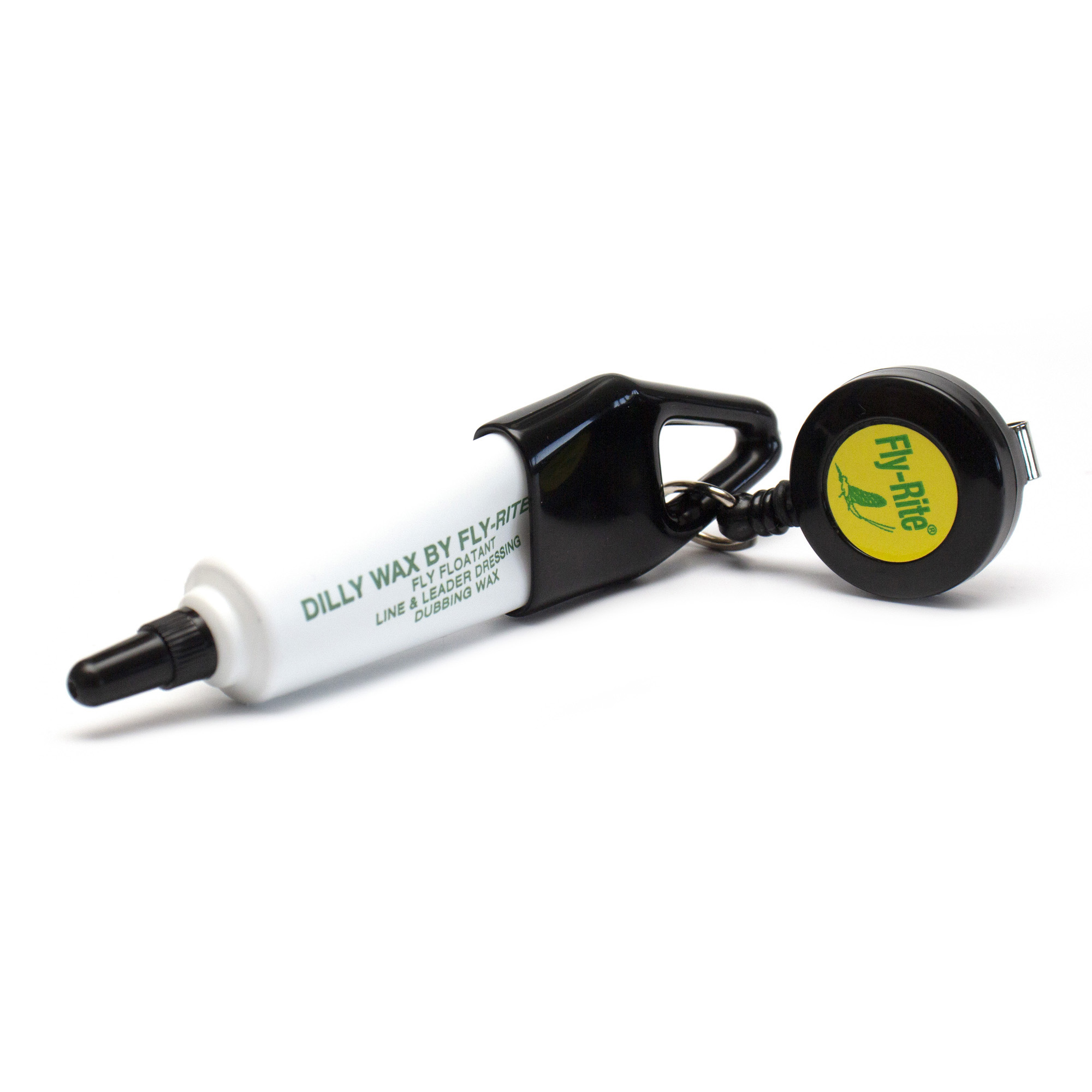
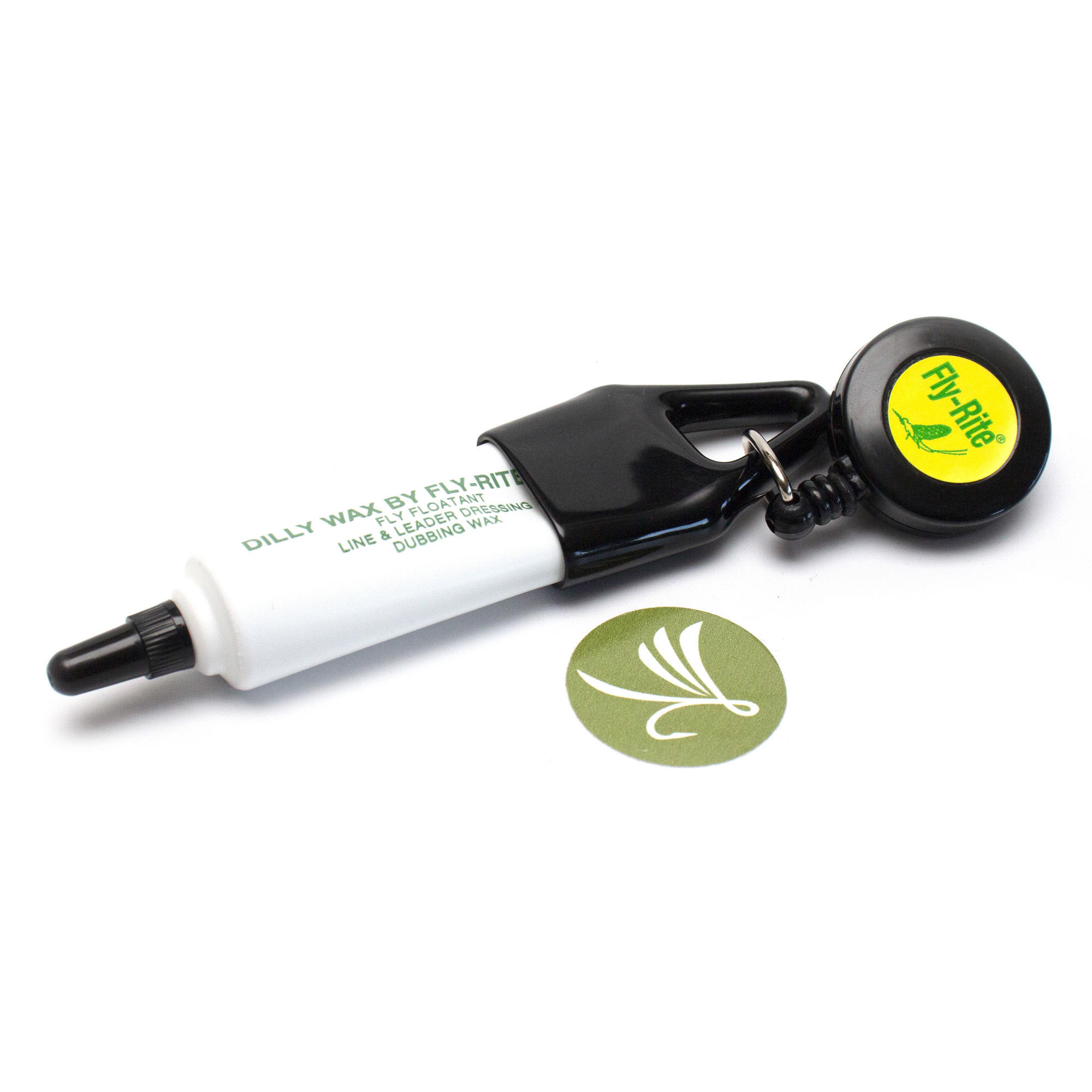
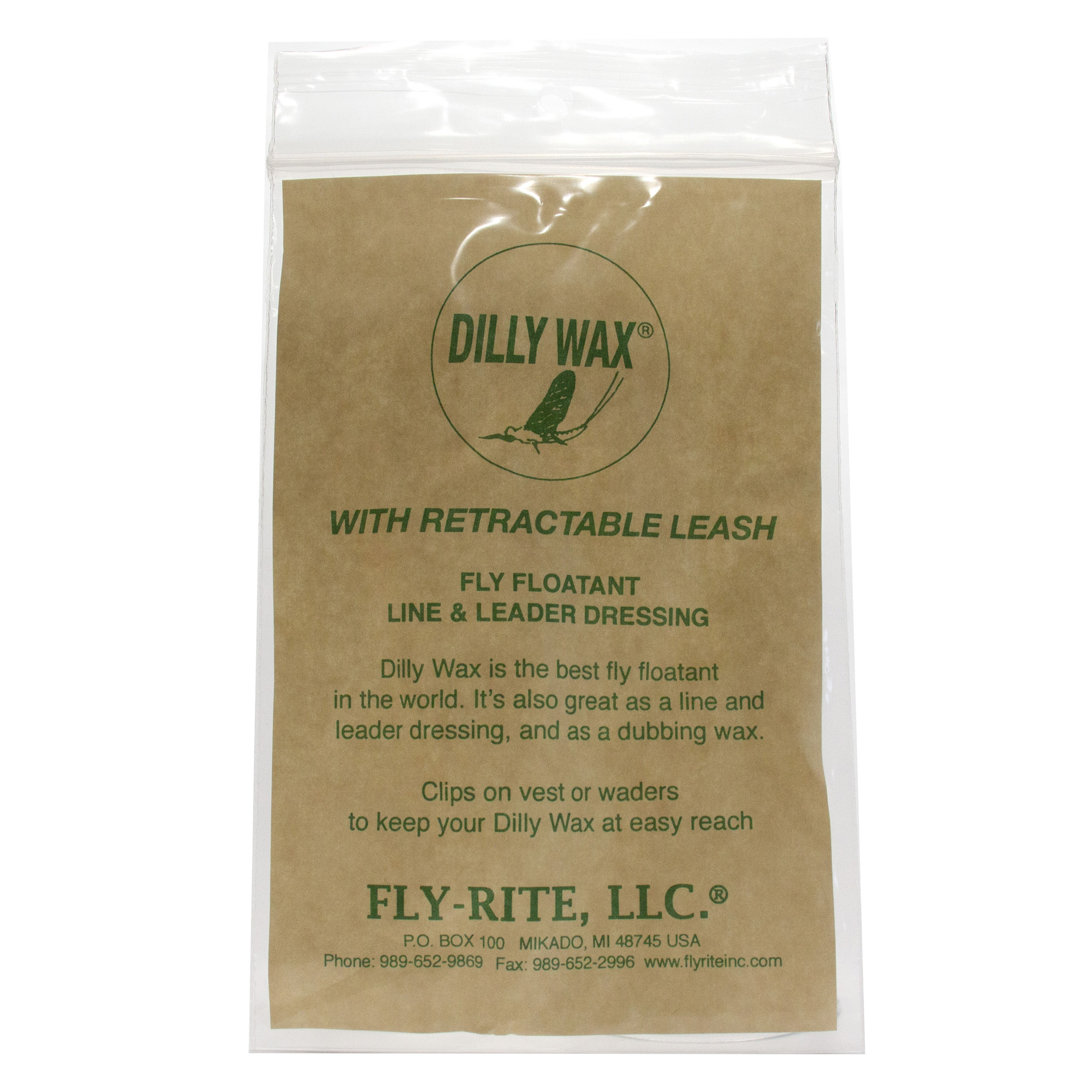
Fly-Rite Dilly Wax with Leash/Retractor
Fly-Rite Dilly Wax is a high-quality wax floatant for dry flies, designed to improve buoyancy and help protect fly materials from water absorption.
The special wax formula softens with the warmth of your fingers, allowing precise and controlled application to specific parts of the fly. After application, it creates a water-repellent layer that helps the dry fly remain stable on the water surface.
Fly-Rite Dilly Wax is especially effective on dry flies with poly yarn posts, hackle, and synthetic materials, but it also works well with classic dry fly patterns tied with natural materials. The product can additionally be used as a dressing for leaders and fly lines, as well as a tying wax.
The set includes a practical Leash/Retractor holder, keeping the wax easily accessible and ready for use directly on the water.
Technical Specifications
| Type | Dry Fly Floatant |
| Form | Wax |
| Purpose | Improving dry fly buoyancy |
| Suitable For | Dry flies with natural and synthetic materials |
| Action | Creates a water-repellent layer and improves buoyancy |
| Additional Uses | Leader dressing, fly line dressing, and fly tying wax |
| Accessory | Leash/Retractor holder |
| Manufacturer | Fly-Rite |
How to Use
Take a small amount of Fly-Rite Dilly Wax between your fingers and apply a thin layer to the required parts of the dry fly – hackle, wing posts, body, or other materials that need improved water repellency.
Use the product sparingly. A thin layer provides maximum effectiveness without adding unnecessary weight or affecting the natural behaviour of the fly.
Key Features
- Classic wax floatant for dry flies.
- Provides excellent and long-lasting buoyancy.
- Easy application thanks to the softening wax formula.
- Suitable for poly yarn, hackle, and various fly materials.
- Can also be used as a dressing for leaders and fly lines.
- Practical Leash/Retractor holder for quick access.

|
TIP FROM FlyFishing.bgWax floatants allow very precise application. With small dry flies, the amount of product is critical – a thin layer on the right areas often performs better than heavy coating. |